Most people assume speed is the defining quality of a great courier. Yet 94% of UK consumers say accurate tracking matters more to them than how fast a parcel arrives. That single fact changes everything about how we should think about delivery. Modern same-day and next-day logistics in the UK run on a sophisticated stack of scanning technology, GPS signals, machine learning, and data pipelines. Understanding how all of this fits together helps you make smarter decisions, whether you're a business managing hundreds of shipments or an individual waiting on something urgent.
Table of Contents
- How tracking really works: From barcodes to real-time data
- The role of GPS, apps, and algorithms in live delivery tracking
- Data quality and the hidden risks in delivery tracking
- Applying delivery tracking data: For businesses and individuals
- A fresh perspective: Why delivery tracking is about trust, not just tech
- Reliable delivery tracking with Track & Deliver
- Frequently asked questions
Key Takeaways
| Point | Details |
|---|---|
| Multiple scan points | UK parcels are tracked by scanning at 5–7 key points from depot to doorstep. |
| Real-time location | GPS on vans and driver apps power live ETAs and route updates for customers. |
| Data quality matters | Cleaner data and fewer errors mean more reliable tracking and fewer missed deliveries. |
| Scheduled slots help | One-hour delivery windows and proactive updates reduce missed deliveries for everyone. |
| Trust over tech | Transparent updates and honest communication build customer loyalty beyond just the technology. |
How tracking really works: From barcodes to real-time data
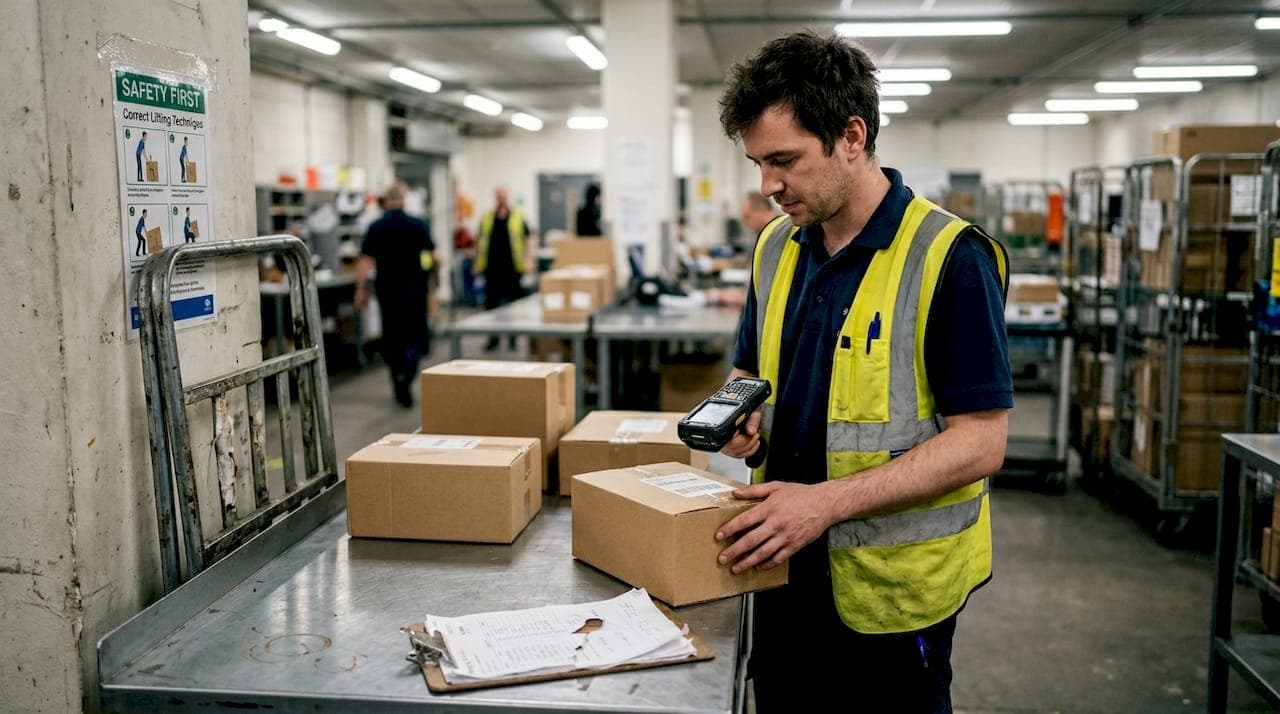
Every time your parcel moves, something records it. That "something" is usually a barcode scanner, a QR code reader, or an RFID reader positioned at a key handoff point in the delivery chain. The scan captures a unique identifier tied to your shipment and pushes that data into a central system, which then triggers a status update visible to you via an app or email.
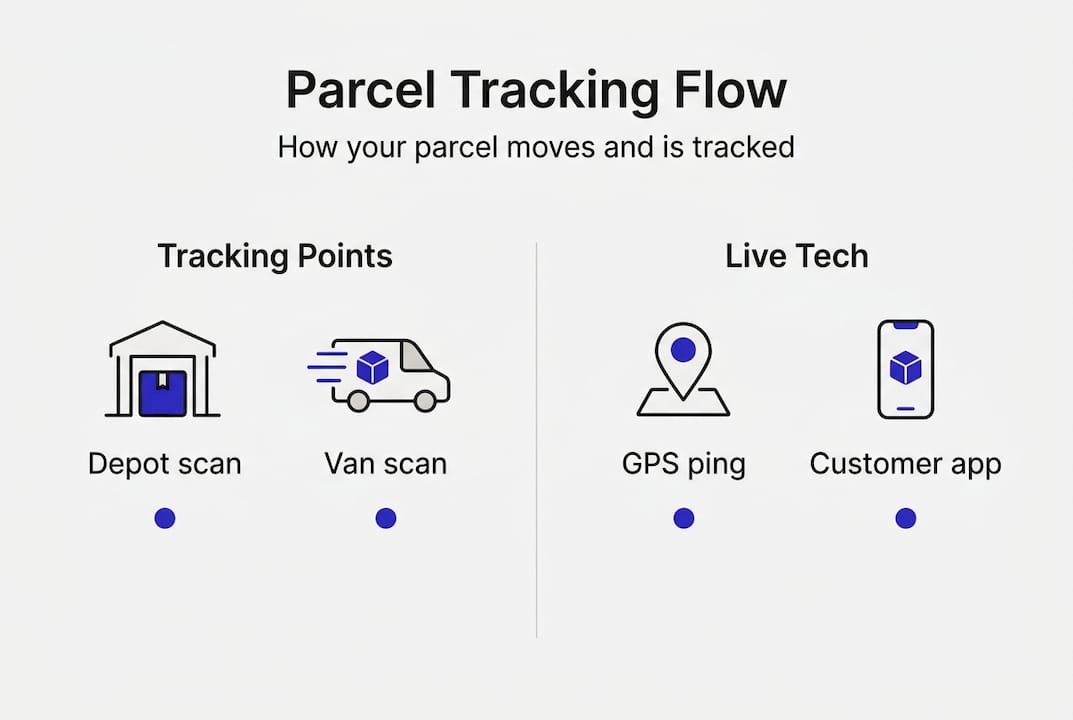
The journey typically includes five to seven scan points. For Royal Mail, tracking uses barcodes, QR codes, and RFID across sorting centres, delivery offices, and at the point of delivery itself. Each scan logs a timestamp, location code, and parcel identifier. That combination is what turns raw movement into a readable status like "Arrived at delivery office" or "Out for delivery."
RFID technology is particularly powerful in high-volume depot environments. Unlike barcodes, RFID tags do not need a direct line of sight to be read. A pallet of parcels can pass through an RFID gate and every item gets logged simultaneously. This dramatically speeds up the intake and dispatch process at large sorting hubs.
DPD operates differently at the customer-facing end. DPD Predict offers live tracking and one-hour delivery windows, meaning customers see a narrower, more precise estimate rather than a vague "between 8am and 6pm" slot. This is possible because DPD layers GPS data on top of scan events, giving a more granular picture of where the driver actually is.
| Feature | Royal Mail | DPD |
|---|---|---|
| Scan points | 5 to 7 | Multiple depot and van scans |
| Live GPS tracking | At delivery only | Full driver map via app |
| Delivery window | Day estimate | One-hour Predict slot |
| RFID use | Depot cages | Limited |
The key takeaway here is that barcode scanning explained across multiple handoffs is what creates a reliable tracking trail. A parcel scanned only at collection and delivery leaves a huge gap in the middle.
- Collection scan: Parcel logged into the system
- Sorting centre scan: Routed to the correct region
- Depot arrival scan: Confirmed at local hub
- Van load scan: Assigned to a driver
- Delivery scan: Confirmed delivered or attempted
Pro Tip: The more scan points a courier uses, the higher the tracking accuracy. When choosing a courier for critical shipments, ask how many scan events they log per journey.
The role of GPS, apps, and algorithms in live delivery tracking
Scans tell you where a parcel has been. GPS tells you where it is right now. These two data streams, combined intelligently, are what power the live tracking experiences most of us now expect as standard.
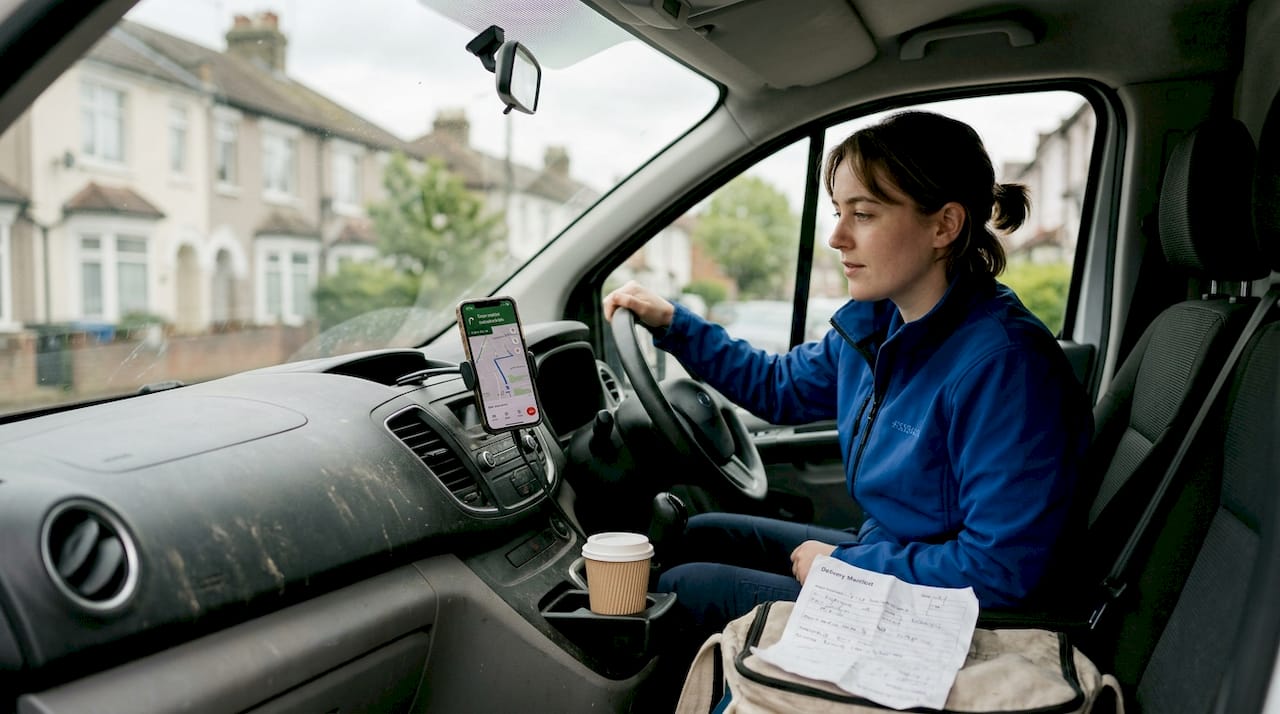
Drivers carry GPS-enabled devices, usually a dedicated scanner or a smartphone running a courier app. These devices ping location data at regular intervals, often every 30 to 60 seconds. That stream feeds into a central platform, which calculates the driver's current position relative to remaining stops and produces an estimated time of arrival.
DPD Predict provides a live driver map and one-hour windows, while Royal Mail logs GPS data primarily at the point of delivery rather than throughout the route. The difference matters enormously for businesses that need to plan around a delivery or customers who cannot leave a parcel unattended.
Machine learning adds another layer. Algorithms analyse historical delivery data, current traffic conditions, driver speed, and stop density to refine ETAs dynamically. Here is how the process typically works:
- Raw GPS coordinates are collected every 30 to 60 seconds from the driver's device
- The system maps those coordinates against the planned route
- Historical data for that route and time of day is applied
- Traffic and weather feeds adjust the calculation in real time
- A refined ETA is pushed to the customer-facing app, usually within under one minute of the last data point
The results can be striking. One UK retailer improved ETA error rates by 42% simply by cleaning up its data inputs and ensuring GPS pings were consistent throughout the route. That improvement had nothing to do with faster vans. It was purely a data quality win.
"Accurate delivery predictions are not a luxury feature. For businesses managing customer expectations and individuals planning their day, a reliable ETA is the difference between a smooth experience and a frustrating one."
Real-time delivery tracking is now a baseline expectation, not a premium add-on. Businesses that cannot offer it risk losing repeat customers to those who can.
| Data source | Update frequency | Impact on ETA |
|---|---|---|
| Barcode scan | Per handoff | Confirms location milestone |
| GPS ping | Every 30 to 60 seconds | Powers live map and ETA |
| Traffic feed | Continuous | Adjusts route time |
| Historical data | Pre-loaded | Baseline ETA model |
Data quality and the hidden risks in delivery tracking
All the GPS signals and RFID readers in the world cannot compensate for bad data. And bad data is more common than most people realise.
"Dirty data" is the term used for inconsistent, duplicate, or incomplete records within a tracking system. A parcel scanned twice at the same depot creates a duplicate event. A scan with a corrupted timestamp throws off the ETA model. A missing scan in the middle of a journey leaves a gap that the algorithm has to guess across. Dirty data causes up to 38% ETA misses, and couriers that target event freshness under 60 seconds are actively working to close that gap.
Common causes of tracking errors include:
- Depot dwell time: Parcels sitting in a hub longer than expected without a scan
- Customs delays: International or cross-border items held without status updates
- Weather and traffic: Route changes that the algorithm was not trained on
- Connectivity gaps: Drivers in rural areas losing signal before a scan uploads
- Duplicate events: The same scan logged twice, confusing the sequence
The good news is that leading couriers are investing heavily in data hygiene. Targeting event freshness under 60 seconds means that every scan event should appear in the customer-facing system within one minute of happening. That is an ambitious standard, but it is the direction the industry is moving.
Why does this matter more than raw speed? Because 94% of consumers prefer accurate updates, and only 4% say same-day delivery is their top priority. People would rather know precisely when something will arrive than have it arrive fast with no warning.
"A parcel that arrives in three hours with no tracking update is more stressful than one arriving in five hours with clear, accurate notifications every step of the way."
Pro Tip: Scheduled one-hour delivery slots significantly reduce missed deliveries. If your courier offers this option, use it. It benefits both you and the driver by reducing wasted journeys.
For businesses, common tracking errors can have real financial consequences, from failed deliveries to customer service costs and refund claims.
Applying delivery tracking data: For businesses and individuals
Understanding the technology is useful. Knowing how to act on it is what actually improves your delivery outcomes.
For individuals, the most important scan statuses to understand are:
- In transit: The parcel is moving between facilities, not yet at your local depot
- Out for delivery: The driver has your parcel on the van for today's round
- Exception: Something has interrupted the normal flow, often requiring action
- Delivery attempted: The driver came but could not complete delivery
If your tracking appears stuck, here is a practical step-by-step approach:
- Wait two to four hours before assuming there is a genuine problem, as depot dwell times are common
- Check whether the last scan was at a sorting centre, which often has longer gaps between updates
- Contact the courier's customer service with your tracking number and the last known scan event
- If the status shows "Exception", look for an accompanying message about customs, address issues, or redelivery options
- For high-value items, request a formal trace investigation if the parcel has not moved in 48 hours
For businesses, the value of tracking data goes well beyond knowing where one parcel is. APIs and webhooks allow proactive exception handling and aggregated views across all live shipments. This means your customer service team can spot a delayed batch before customers start calling. Royal Mail has taken this further by deploying IoT Pixels on 900,000+ cages across its network, giving operational teams granular visibility into where assets are at any moment.
Businesses can also use aggregated tracking data to:
- Identify which routes or depots generate the most exceptions
- Build more accurate delivery promises at checkout
- Automate customer notifications to reduce inbound queries
- Support claims processes with timestamped scan evidence
Using tracking data intelligently is one of the clearest ways to improve customer satisfaction without changing anything about the physical delivery itself.
A fresh perspective: Why delivery tracking is about trust, not just tech
Here is something the logistics industry does not say loudly enough: the technology is not the point. Trust is.
Businesses pour investment into live maps, sub-minute data refresh rates, and AI-powered ETAs. All of that is impressive. But what actually keeps customers coming back is something simpler. They want to know when something will arrive, not just watch a dot move on a screen. Scheduled accuracy, honest communication when things go wrong, and consistent follow-through matter far more than the sophistication of the underlying system.
Businesses often over-invest in real-time tech when what consumers actually prefer is scheduled accuracy. A courier that sends a clear message saying "your parcel will arrive between 10am and 11am tomorrow" and then delivers within that window will earn more loyalty than one offering a live map that shows the driver circling three streets away with no ETA.
When things go wrong, which they will, the couriers that communicate honestly and quickly are the ones that retain customers. Silence is the real trust-killer. Technology should serve transparency. That is the standard worth holding any delivery partner to.
Reliable delivery tracking with Track & Deliver
If accurate, transparent tracking is what you need for same-day or next-day deliveries across the UK, the right courier partner makes all the difference.
At Track & Deliver, we combine robust real-time notifications, flexible scheduling, and dedicated customer support to give both businesses and individuals complete confidence in every shipment. Our same-day courier services are built around honest communication and reliable updates, not just fast vans. Whether you need a single urgent delivery or a managed solution for regular business shipments, we provide the tracking transparency and reliability that modern logistics demands. Get in touch today to find out how we can support your delivery needs.
Frequently asked questions
How do delivery companies track parcels in real time?
They use barcode or RFID scans at each step, merged with GPS data from vans and drivers for live updates and accurate ETAs.
Why does my delivery sometimes show the same status for hours?
Depot dwell times or customs often create tracking gaps, and updates may batch together after certain events rather than appearing individually.
Do all UK couriers provide one-hour delivery windows?
Not all. DPD Predict gives one-hour slots, while other services may offer broader time windows or simply a delivery day estimate.
How quickly is tracking information updated after a scan?
Updates appear two to ten minutes after each scan, though this depends on the courier's system and the driver's data connection quality at the time.